Category Archives: Uncategorized

Reflecting

why

Image courtesy of Katie Sayer

A little over a year ago, I went to a medical clinic in the city I was living in at the time as a follow up to a test that I had done six months earlier at the hospital. The situation was pretty routine in my mind. Go to the clinic, get the doctor to request a test, get the test done, and review the results together. The problem was that I had only been the in city for a short while and I didn’t have family doctor as of yet. That is why I was sitting in a walk-in clinic on a Sunday afternoon waiting approximately three hours to just get the call to go to one of the rooms where I could wait another 30 minutes for the doctor.

So, here I was sitting in the room, waiting (im)patiently. Looking around the room, I started to notice something strange. There wasn’t a single piece of current medical equipment to be found. The baby scale was a balance with a set of weights. There wasn’t a computer or screen around, only binders and clipboards. I started to wonder who was going to step through that door next. Then, with some struggle with the door first, entered the oldest doctor I had seen in a long while. He shuffled (literally) over to the nearest chair and plopped down. He took a moment to catch his breath while I looked on with a stunned expression. He lifted his glasses and pulled my chart within a nose length of his eyes and scanned the page. We talked for a bit about what I needed and he rose to open the door and bellowed to the nurse to bring him a form.

Supplied with the form, the doctor started to work his way down the paper. It went something like this:

“Do you have any allergies?”

“No.”

“Are you on any prescription medication?”

“No.”

“Are you pregnant?”

“Uhhhhh. Not to my knowledge.”

I have to say, that is the first time in my life that anyone, let alone a doctor, has asked me, a man, if I was pregnant. What was more surprising is that he didn’t miss a beat and continued his way down the form as if nothing was out of the ordinary. Needless to say, I was happy to get out of there, get the test done, and not have to return to the office since they found nothing wrong.

This situation is not unlike what I see with in the teaching field today. Continue reading Reflecting

Remembering

remembrance

Image courtesy of Mark Teasdale

For many of the British Commonwealth countries around the world, Remembrance Day is set aside for honouring those who have died fighting for their countries. One of the traditions around this holiday is the wearing of bright red plastic or cloth poppies, a ritual connected to the poem written by Lieutenant Colonel John McRae, a Canadian physician serving in Beligium in the First World War. Today, the Royal Canadian Legion in Canada sells poppies by donation, money that goes towards the veterans and their families.

As a child, I didn’t understand the importance of the poppy and I remember my friend and I bought up as many poppies as we could and put them on our jackets and shirts. To us, this was something that we could afford. We could put in five or ten cents in the bucket each time we saw someone selling them. We thought we were so cool, that was until one veteran saw us doing this and asked us what we were up to. We sheepishly explained that we were collecting them. He smiled and asked us if we knew what the poppy meant. Of course we didn’t, so he took the time to explain it in a gentle and thoughtful way. I remember us feeling pretty stupid afterward and gave him back all of our poppies, minus one each.

My problem was that I treated the poppy as a commodity, something to be bought, traded for, and displayed as a symbol of pride. What I hadn’t realized was how it was something completely different. Instead, the poppy is a symbol of unity and remembrance. A chance for us to show our support for others, whether rich or poor, common or famous, powerful or weak, we are all the same. It is about identity, a sign to others that we belong to this group, not standing up as individuals. The poppy itself is nothing more than plastic and metal, worthless material made valuable through the action of giving to others.

I don’t know why that came to mind today, but it started me thinking about how we treat assessment in the classroom. Continue reading Remembering

Retreating

retreat

Image courtesy of Grant Kwok

For any of you who have been regular readers of this blog, you know that I haven’t been a big fan of ‘flipping’ the language classroom. To clarify a bit, I have never been entirely against the concept of having these students do some preparation at home before class, but the idea of converting your entire curriculum over to this method seems off to me. I have always felt like we were taking away something valuable by not having the ability to use this time to see how students were doing. One student may take longer to finish than another, but you wouldn’t find that out without having them in the classroom.

Fast forward to last weekend where I had the opportunity to sit in on a session about flipping given by two people I trust in the field of ELT, Iwona and Margarita of English Online. To be honest, I mostly went to the session to support them, but I was also interested to hearing their side of the matter. While I am still not completely convinced about flipping my entire classroom, I can see merit in some of the things that they mentioned, retreating a bit from my hard and fast stance. Here are my takeaways from that session. Continue reading Retreating

Dieting

scales

Image courtesy of davidd

When I was in grade eleven, I took a foods class as an elective. Most students took a language elective, but due to a long story involving a move from one part of Canada to another and a teacher who really hated me (I need to tell this story in more detail some time), I ended up dropping French in grade nine. So, here I was one of the only guys in a class of about 20 girls taking cooking and nutrition. Needless to say, it was a great choice. I actually learned a lot from that class including a pretty solid understanding of nutrition and diet. At that time, the Rotation Diet and Scarsdale diet were in vogue as a way of losing weight and we took the time to talk about fad diets and the dangers behind them. What my teacher stressed was that there was no magic bullet to losing weight and staying healthy. Eating balanced meals and exercising regularly were probably the best thing you could do to being and staying healthy.

No, I am not changing professions to become a food economics teacher, but what I do what to address is the need to find that ‘lighting in a jar’ form of teaching that will make learning so much better for your students and so much easier for the instructor. Throughout the years, methods and approaches have come and gone with varied success, but what sustains learning is something altogether different. Continue reading Dieting

Timing

stopwatch

Image courtesy of William Warby

Today, I had the opportunity to give my first webinar. I’ve given presentations before, but this is the first one I have done online. Normally, I’m quite comfortable giving a session, even if I am a little nervous beforehand. Once I get talking, I normally get into a groove. That wasn’t the case today, I felt the pressure of all of the things that could potentially go wrong and to top it off, my talk was being followed up with a second seminar right after mine. For some reason, that time pressure really got to me. I kept watching the clock, making sure I was on task and on time.

This experience made me think about my students and the way we time things in our classrooms. Continue reading Timing

Representing

8403827929_a7a10b017f_b

Image used by permission from UrbaneWomenMag

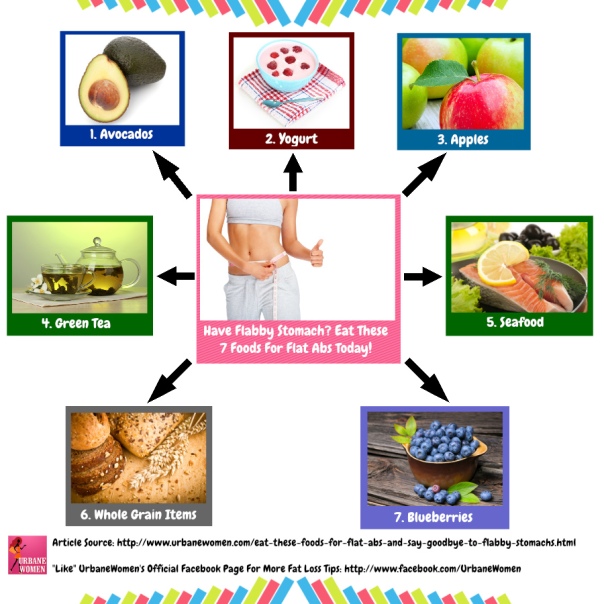
I don’t know when it started, but at some point in the last 5 or so years, people have really started to give up on fact checking. I mostly put the blame on the speed in which we receive our information. It used to be that we would read a newspaper or journal article, process it, discuss it, and then evaluate it on the merits of the content. Today, instead of newspapers, we have social media; instead of journal articles, we have infographics.

Ahhh, infographics. Those slick little data displaying, fun to share, fast-info representations of what used to be relevant data compressed into bite-sized chunks. Who cares where the material comes from, it looks AMAZING!

Of course I’m being a bit facetious and I have been known to use the odd infographic in my lesson, but I think I am pretty careful to weed out the visuals that blatantly misrepresent the truth. It isn’t always obvious, but with a little bit of sleuthing, anyone can separate the wheat from chafing (bad data use rubs me the wrong way). It was that very idea that started me on the journey to actually include MORE infographics in my classroom. Why not have the students critically analyze the data to see what has been carefully chosen, not added, or twisted in knots. Here is how I plan on going about this. Continue reading Representing

Photocopying

photocopy paper

Image courtesy of Enokson

In a recent staff meeting at my school, the director made a remark about the photocopy usage going sky high in recent months. It isn’t entirely clear why that is, but it does demonstrate the dependance many teachers still have with printed material. What is copied can vary from teacher to teacher, but the mainstay for many instructors is the worksheet. Continue reading Photocopying

Negotiating

markers

Image courtesy of Steven Lilley

Note: This post is a copy of my submission for one of the IATEFL scholarships. Since I didn’t get the scholarship, I thought I would share it with you all. I hope you get something out of it.

From overhead projectors to interactive whiteboards, vinyl records to MP3s, the application of technology to the language classroom has been going on for decades, but not always smoothly. Most difficulties that emerge are due to a failure of both the learner and the teacher to anticipate how these changes may affect other areas as well. Take the use of mobile devices in the classroom as an example. There is a stark division between those who endorse the use of personal phones, tablets, and laptops in the classroom, and those who forbid them. Advocates point to a high level of student engagement along with the ability for students to access material beyond the classroom. This encourages students to take ownership of their learning in ways that the traditional classroom often cannot. Detractors highlight the ways devices distract from and often disrupt the learning process, with students accessing social networks, texting with friends, playing games, and ignoring others. But are these simply surface problems that mask a deeper issue? Continue reading Negotiating

Sharing

Image courtesy of Ben Grey

I grew up in a small town in Canada before moving to the ‘big city’ of Calgary when I was 14. One major difference I noticed right away was the disparity between the haves and have nots. Sure, there was rich and poor in the town I had grown up in, but I don’t remember seeing it displayed in such a noticeable way as I did in Calgary.

For the most part, my parents never made any remarks about a person’s wealth, but there was this one friend of my parents who had a lot of money and owned property in various places including a cabin in Montana. She drove a nice car, but nothing flashy. She didn’t act rich, but she certainly was. One day, she was over at our place and the topic of skiing came up. She mentioned that she had this place in Montana and that she was more than happy to have people stay there for free any time we wanted. It wasn’t one of those ‘I’ll make the offer so that I can show you how much money I have’ type of statements, it was a genuine ‘what’s mine is yours’ sort of thing. After she left, my parents remarked that it wasn’t good or bad to be rich, it is what you do with what you have that makes the difference.

Another story comes from an offbeat British fellow named Jamie McDonald who is currently running across Canada to raise money for various hospitals for sick children. He doesn’t have a support team or even a real plan other than to get across Canada before his visa runs out! He is a genuinely nice guy who would give someone the shirt off his back if need be. Don’t take my word for it, read his posts on Twitter and Facebook and you will see that he doesn’t have much, but he is giving all that he can to help others.

I am starting to realize how important it is that we share with others what we have in terms of our experience and expertise. Continue reading Sharing

Awarding

7871537924_dc4fe3f44a_z

Image courtesy of Ray Larabie

I don’t want to kick a hornet’s nest, but I am having a tough time lately with people’s obsession with the word ‘best’. It appears to me that social media, especially blogging combined with Twitter or Facebook, has fuelled this fire of lists, awards, and badges. I have to admit that I have blogged the occasional list of educational tools around a topic, but I think I have been fairly careful to stay clear of the use of superlatives to drive traffic to my site. After all, who’s to say that I would be correct in saying that these things are the ultimate end-all / be-all on these topics? Continue reading Awarding