Tag Archives: tefl

Reflecting

why

Image courtesy of Katie Sayer

A little over a year ago, I went to a medical clinic in the city I was living in at the time as a follow up to a test that I had done six months earlier at the hospital. The situation was pretty routine in my mind. Go to the clinic, get the doctor to request a test, get the test done, and review the results together. The problem was that I had only been the in city for a short while and I didn’t have family doctor as of yet. That is why I was sitting in a walk-in clinic on a Sunday afternoon waiting approximately three hours to just get the call to go to one of the rooms where I could wait another 30 minutes for the doctor.

So, here I was sitting in the room, waiting (im)patiently. Looking around the room, I started to notice something strange. There wasn’t a single piece of current medical equipment to be found. The baby scale was a balance with a set of weights. There wasn’t a computer or screen around, only binders and clipboards. I started to wonder who was going to step through that door next. Then, with some struggle with the door first, entered the oldest doctor I had seen in a long while. He shuffled (literally) over to the nearest chair and plopped down. He took a moment to catch his breath while I looked on with a stunned expression. He lifted his glasses and pulled my chart within a nose length of his eyes and scanned the page. We talked for a bit about what I needed and he rose to open the door and bellowed to the nurse to bring him a form.

Supplied with the form, the doctor started to work his way down the paper. It went something like this:

“Do you have any allergies?”

“No.”

“Are you on any prescription medication?”

“No.”

“Are you pregnant?”

“Uhhhhh. Not to my knowledge.”

I have to say, that is the first time in my life that anyone, let alone a doctor, has asked me, a man, if I was pregnant. What was more surprising is that he didn’t miss a beat and continued his way down the form as if nothing was out of the ordinary. Needless to say, I was happy to get out of there, get the test done, and not have to return to the office since they found nothing wrong.

This situation is not unlike what I see with in the teaching field today. Continue reading Reflecting

Remembering

remembrance

Image courtesy of Mark Teasdale

For many of the British Commonwealth countries around the world, Remembrance Day is set aside for honouring those who have died fighting for their countries. One of the traditions around this holiday is the wearing of bright red plastic or cloth poppies, a ritual connected to the poem written by Lieutenant Colonel John McRae, a Canadian physician serving in Beligium in the First World War. Today, the Royal Canadian Legion in Canada sells poppies by donation, money that goes towards the veterans and their families.

As a child, I didn’t understand the importance of the poppy and I remember my friend and I bought up as many poppies as we could and put them on our jackets and shirts. To us, this was something that we could afford. We could put in five or ten cents in the bucket each time we saw someone selling them. We thought we were so cool, that was until one veteran saw us doing this and asked us what we were up to. We sheepishly explained that we were collecting them. He smiled and asked us if we knew what the poppy meant. Of course we didn’t, so he took the time to explain it in a gentle and thoughtful way. I remember us feeling pretty stupid afterward and gave him back all of our poppies, minus one each.

My problem was that I treated the poppy as a commodity, something to be bought, traded for, and displayed as a symbol of pride. What I hadn’t realized was how it was something completely different. Instead, the poppy is a symbol of unity and remembrance. A chance for us to show our support for others, whether rich or poor, common or famous, powerful or weak, we are all the same. It is about identity, a sign to others that we belong to this group, not standing up as individuals. The poppy itself is nothing more than plastic and metal, worthless material made valuable through the action of giving to others.

I don’t know why that came to mind today, but it started me thinking about how we treat assessment in the classroom. Continue reading Remembering

Retreating

retreat

Image courtesy of Grant Kwok

For any of you who have been regular readers of this blog, you know that I haven’t been a big fan of ‘flipping’ the language classroom. To clarify a bit, I have never been entirely against the concept of having these students do some preparation at home before class, but the idea of converting your entire curriculum over to this method seems off to me. I have always felt like we were taking away something valuable by not having the ability to use this time to see how students were doing. One student may take longer to finish than another, but you wouldn’t find that out without having them in the classroom.

Fast forward to last weekend where I had the opportunity to sit in on a session about flipping given by two people I trust in the field of ELT, Iwona and Margarita of English Online. To be honest, I mostly went to the session to support them, but I was also interested to hearing their side of the matter. While I am still not completely convinced about flipping my entire classroom, I can see merit in some of the things that they mentioned, retreating a bit from my hard and fast stance. Here are my takeaways from that session. Continue reading Retreating

Timing

stopwatch

Image courtesy of William Warby

Today, I had the opportunity to give my first webinar. I’ve given presentations before, but this is the first one I have done online. Normally, I’m quite comfortable giving a session, even if I am a little nervous beforehand. Once I get talking, I normally get into a groove. That wasn’t the case today, I felt the pressure of all of the things that could potentially go wrong and to top it off, my talk was being followed up with a second seminar right after mine. For some reason, that time pressure really got to me. I kept watching the clock, making sure I was on task and on time.

This experience made me think about my students and the way we time things in our classrooms. Continue reading Timing

Representing

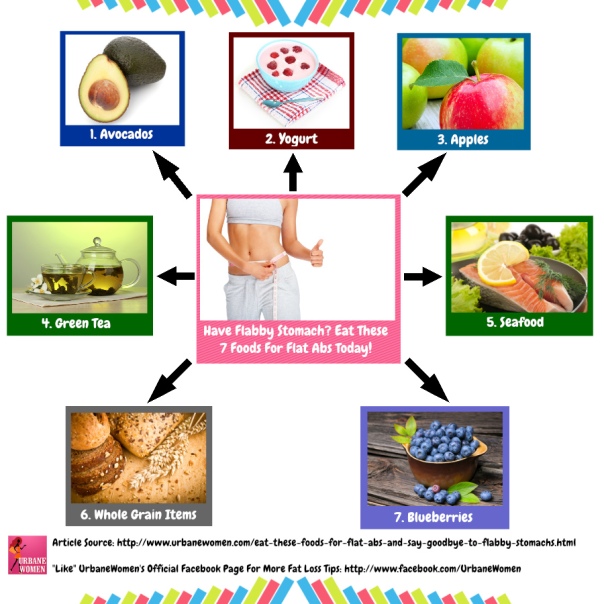
8403827929_a7a10b017f_b

Image used by permission from UrbaneWomenMag

I don’t know when it started, but at some point in the last 5 or so years, people have really started to give up on fact checking. I mostly put the blame on the speed in which we receive our information. It used to be that we would read a newspaper or journal article, process it, discuss it, and then evaluate it on the merits of the content. Today, instead of newspapers, we have social media; instead of journal articles, we have infographics.

Ahhh, infographics. Those slick little data displaying, fun to share, fast-info representations of what used to be relevant data compressed into bite-sized chunks. Who cares where the material comes from, it looks AMAZING!

Of course I’m being a bit facetious and I have been known to use the odd infographic in my lesson, but I think I am pretty careful to weed out the visuals that blatantly misrepresent the truth. It isn’t always obvious, but with a little bit of sleuthing, anyone can separate the wheat from chafing (bad data use rubs me the wrong way). It was that very idea that started me on the journey to actually include MORE infographics in my classroom. Why not have the students critically analyze the data to see what has been carefully chosen, not added, or twisted in knots. Here is how I plan on going about this. Continue reading Representing

Photocopying

photocopy paper

Image courtesy of Enokson

In a recent staff meeting at my school, the director made a remark about the photocopy usage going sky high in recent months. It isn’t entirely clear why that is, but it does demonstrate the dependance many teachers still have with printed material. What is copied can vary from teacher to teacher, but the mainstay for many instructors is the worksheet. Continue reading Photocopying

Awarding

7871537924_dc4fe3f44a_z

Image courtesy of Ray Larabie

I don’t want to kick a hornet’s nest, but I am having a tough time lately with people’s obsession with the word ‘best’. It appears to me that social media, especially blogging combined with Twitter or Facebook, has fuelled this fire of lists, awards, and badges. I have to admit that I have blogged the occasional list of educational tools around a topic, but I think I have been fairly careful to stay clear of the use of superlatives to drive traffic to my site. After all, who’s to say that I would be correct in saying that these things are the ultimate end-all / be-all on these topics? Continue reading Awarding

Hedging

resistors

Image courtesy of Windell Oskay

It is funny how things change as you get older. When I was younger, I swore I would never be a teacher. Both of my parents were teachers and I actually thought they were good at their jobs, but the idea of teaching sounded boring to me. So what did I want to do when I grew up? I wanted to be an inventor. I had this box of old mechanical and electrical components I had scavenged from things I would find around the house and I would attempt to build things from them. My dad even went so far as to buy me a 6V lantern battery as a christmas present one year. It was only one of many unique gifts my parents gave me over the years. Funny thing was, I thought the presents were great.

One day, I decided to solder some random resistors and capacitors together to see what would happen when I plugged them in. Poof. A quick flame and lots of smoke. Oops. Well, at least I didn’t burn the house down. I had no idea that the little coloured bands on the side of the resistor held any relevant information. Nor did I grasp the concept of what a capacitor did. I just took what I thought were relevant parts and assembled them in a way that I thought would work.

For many of my English language students, writing works in the same way. They often piece together formulaic words and phrases that they feel should work in a given situation and PRESTO, you have a sentence that sounds like it was made up of stock words and phrases. Hmmm. Something isn’t working here. Grammatically it is good. Spelling is perfect. Meaning is mostly correct. So what’s wrong? Continue reading Hedging

Guiding

tours

Image courtesy of Marcin Wichary

Yesterday, I was reading over a discussion happening on the #AusELT Facebook page about students’ perception regarding games / activities in the language classroom. I don’t think I am alone when I say that I have had similar discussions with students about teaching methodology in my classroom. I haven’t had it happen in a while, but that doesn’t mean that students haven’t been thinking it. I would agree with some others here in saying that I probably don’t do that many activities or games in my class anymore, but my approach to teaching is still quite different from what many of my students are accustomed to.

Language teaching is one of those things that most people have an opinion on how it should be done. Even those who have never stepped into a language classroom already have a mental picture, rightly or wrongly, about what that looks like. There is no way that we can please all of the students all of the time. Someone in the classroom is going to think that things should be more serious or fun or something in between.

Upon further reflections regarding this discussion on Facebook, my mind started to wander in a somewhat different direction (anyone who knows me understands that this is completely normal). One of the comments from Mike Smith was in regards to how to best use the time you have with the students in the classroom. He suggested that there is work that is best done by the student on their own leaving more time in the classroom for more interactive practice. I think Mike is onto something here. To flesh out his point a bit more, I decided to break down the various components of language learning into two camps: teacher guided or led and individual work. There really is two parts to the teacher guided or led, that is one-to-one tutoring and group or classwork, but for the sake of this post, I will clump them together into one inseparable group. Continue reading Guiding

Understanding

respect

Image courtesy of Ben Dalton

I have mentioned in previous posts that I have only two rules in my classroom: have fun and respect one another. At the beginning of each term, I have my students work out what that means based on various topics including cell phone use in the classroom, attendance, and cultures. From that, we build a code of classroom conduct that each of us, including myself, need to follow. It works well and it tells my students I respect them as a person and I hope that they would do the same for me.

A week ago, I came across this news article of a teacher in Mexico who confronted her students about some nasty things that had been tweeted about the teacher by one of the students. I won’t get into details, but the teacher used the classroom to address the issue in a very direct way. The comments on the CNN news article show a number of people in support of the teacher saying, “She is the authority in her classroom,” and “Humiliation is needed in schools, much more of it”. The whole event, from student to teacher to administration to the general public’s reaction has made me feel sad. I don’t think the issue here is ‘putting someone in their place’. I think the real issue is how we view one another as human beings.

After reading the article and watching the video, I started to think about each person or group of people affected by this event and I started to see how complex this issue is and how difficult it is to ‘place blame’ (not that I think we should). I decided to break it down in a sort of chronological order as things progressed. Continue reading Understanding