Representing

8403827929_a7a10b017f_b

Image used by permission from UrbaneWomenMag

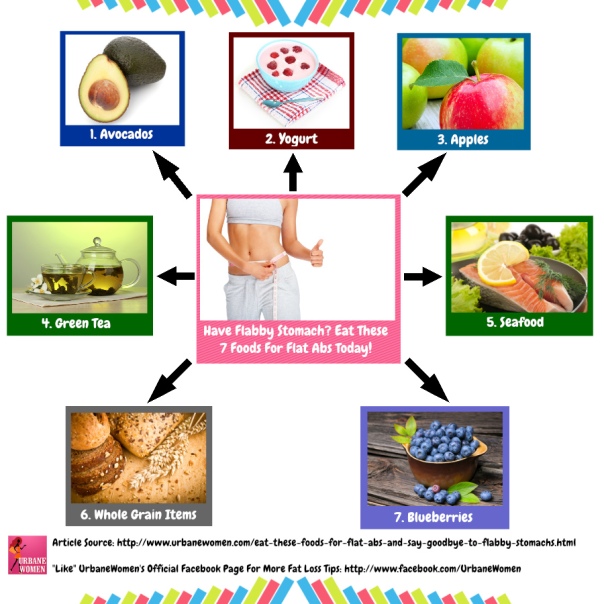
I don’t know when it started, but at some point in the last 5 or so years, people have really started to give up on fact checking. I mostly put the blame on the speed in which we receive our information. It used to be that we would read a newspaper or journal article, process it, discuss it, and then evaluate it on the merits of the content. Today, instead of newspapers, we have social media; instead of journal articles, we have infographics.

Ahhh, infographics. Those slick little data displaying, fun to share, fast-info representations of what used to be relevant data compressed into bite-sized chunks. Who cares where the material comes from, it looks AMAZING!

Of course I’m being a bit facetious and I have been known to use the odd infographic in my lesson, but I think I am pretty careful to weed out the visuals that blatantly misrepresent the truth. It isn’t always obvious, but with a little bit of sleuthing, anyone can separate the wheat from chafing (bad data use rubs me the wrong way). It was that very idea that started me on the journey to actually include MORE infographics in my classroom. Why not have the students critically analyze the data to see what has been carefully chosen, not added, or twisted in knots. Here is how I plan on going about this. Continue reading Representing

Photocopying

photocopy paper

Image courtesy of Enokson

In a recent staff meeting at my school, the director made a remark about the photocopy usage going sky high in recent months. It isn’t entirely clear why that is, but it does demonstrate the dependance many teachers still have with printed material. What is copied can vary from teacher to teacher, but the mainstay for many instructors is the worksheet. Continue reading Photocopying

Negotiating

markers

Image courtesy of Steven Lilley

Note: This post is a copy of my submission for one of the IATEFL scholarships. Since I didn’t get the scholarship, I thought I would share it with you all. I hope you get something out of it.

From overhead projectors to interactive whiteboards, vinyl records to MP3s, the application of technology to the language classroom has been going on for decades, but not always smoothly. Most difficulties that emerge are due to a failure of both the learner and the teacher to anticipate how these changes may affect other areas as well. Take the use of mobile devices in the classroom as an example. There is a stark division between those who endorse the use of personal phones, tablets, and laptops in the classroom, and those who forbid them. Advocates point to a high level of student engagement along with the ability for students to access material beyond the classroom. This encourages students to take ownership of their learning in ways that the traditional classroom often cannot. Detractors highlight the ways devices distract from and often disrupt the learning process, with students accessing social networks, texting with friends, playing games, and ignoring others. But are these simply surface problems that mask a deeper issue? Continue reading Negotiating

Sharing

Image courtesy of Ben Grey

I grew up in a small town in Canada before moving to the ‘big city’ of Calgary when I was 14. One major difference I noticed right away was the disparity between the haves and have nots. Sure, there was rich and poor in the town I had grown up in, but I don’t remember seeing it displayed in such a noticeable way as I did in Calgary.

For the most part, my parents never made any remarks about a person’s wealth, but there was this one friend of my parents who had a lot of money and owned property in various places including a cabin in Montana. She drove a nice car, but nothing flashy. She didn’t act rich, but she certainly was. One day, she was over at our place and the topic of skiing came up. She mentioned that she had this place in Montana and that she was more than happy to have people stay there for free any time we wanted. It wasn’t one of those ‘I’ll make the offer so that I can show you how much money I have’ type of statements, it was a genuine ‘what’s mine is yours’ sort of thing. After she left, my parents remarked that it wasn’t good or bad to be rich, it is what you do with what you have that makes the difference.

Another story comes from an offbeat British fellow named Jamie McDonald who is currently running across Canada to raise money for various hospitals for sick children. He doesn’t have a support team or even a real plan other than to get across Canada before his visa runs out! He is a genuinely nice guy who would give someone the shirt off his back if need be. Don’t take my word for it, read his posts on Twitter and Facebook and you will see that he doesn’t have much, but he is giving all that he can to help others.

I am starting to realize how important it is that we share with others what we have in terms of our experience and expertise. Continue reading Sharing

Awarding

7871537924_dc4fe3f44a_z

Image courtesy of Ray Larabie

I don’t want to kick a hornet’s nest, but I am having a tough time lately with people’s obsession with the word ‘best’. It appears to me that social media, especially blogging combined with Twitter or Facebook, has fuelled this fire of lists, awards, and badges. I have to admit that I have blogged the occasional list of educational tools around a topic, but I think I have been fairly careful to stay clear of the use of superlatives to drive traffic to my site. After all, who’s to say that I would be correct in saying that these things are the ultimate end-all / be-all on these topics? Continue reading Awarding

Hedging

resistors

Image courtesy of Windell Oskay

It is funny how things change as you get older. When I was younger, I swore I would never be a teacher. Both of my parents were teachers and I actually thought they were good at their jobs, but the idea of teaching sounded boring to me. So what did I want to do when I grew up? I wanted to be an inventor. I had this box of old mechanical and electrical components I had scavenged from things I would find around the house and I would attempt to build things from them. My dad even went so far as to buy me a 6V lantern battery as a christmas present one year. It was only one of many unique gifts my parents gave me over the years. Funny thing was, I thought the presents were great.

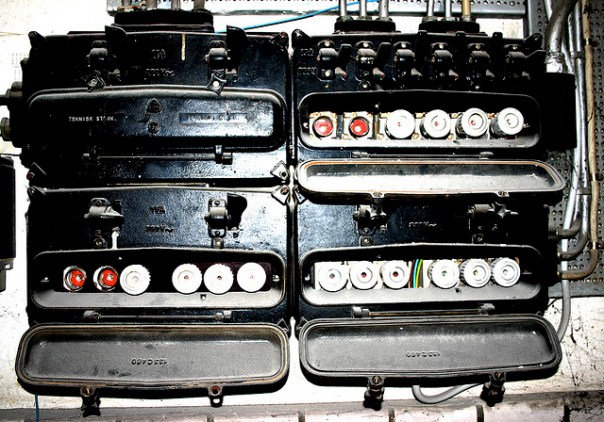
One day, I decided to solder some random resistors and capacitors together to see what would happen when I plugged them in. Poof. A quick flame and lots of smoke. Oops. Well, at least I didn’t burn the house down. I had no idea that the little coloured bands on the side of the resistor held any relevant information. Nor did I grasp the concept of what a capacitor did. I just took what I thought were relevant parts and assembled them in a way that I thought would work.

For many of my English language students, writing works in the same way. They often piece together formulaic words and phrases that they feel should work in a given situation and PRESTO, you have a sentence that sounds like it was made up of stock words and phrases. Hmmm. Something isn’t working here. Grammatically it is good. Spelling is perfect. Meaning is mostly correct. So what’s wrong? Continue reading Hedging

Lecturing

lecture

Image courtesy of Ed Brambley

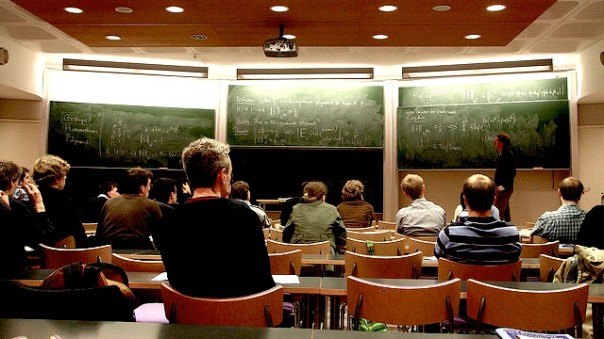
One of the teachers I had in university made heavy use of an overhead projector (OHP). He used the roller type of transparency and he had handwritten notes for each class on separate rolls. He would come into class, put the next ‘scroll’ on the OHP, turn off the lights, plop down beside the OHP, and roll the transparency to the first section. He proceeded to read over the densely packed section and then roll the ‘scroll’ to the next section. The first time this happened, I panicked. Being a novice notetaker, I was attempting to write out his notes word for word, but since he could read out the notes faster than I could write them, I could only get through about a quarter of the page before it scrolled off the screen. I learned very quickly to only jot down what I needed to remember and then expanded on those notes when I got home later that day.

That was me as a university student in my own language with a basic understanding of the topic. Imagine that you are an English language student taking courses in a language you are still learning to understand at a general level. Add technical language, a variance in speaking styles, and the pressure of marks and you have a situation which can cause no end of frustration and heartache for the student. Continue reading Lecturing

Guiding

tours

Image courtesy of Marcin Wichary

Yesterday, I was reading over a discussion happening on the #AusELT Facebook page about students’ perception regarding games / activities in the language classroom. I don’t think I am alone when I say that I have had similar discussions with students about teaching methodology in my classroom. I haven’t had it happen in a while, but that doesn’t mean that students haven’t been thinking it. I would agree with some others here in saying that I probably don’t do that many activities or games in my class anymore, but my approach to teaching is still quite different from what many of my students are accustomed to.

Language teaching is one of those things that most people have an opinion on how it should be done. Even those who have never stepped into a language classroom already have a mental picture, rightly or wrongly, about what that looks like. There is no way that we can please all of the students all of the time. Someone in the classroom is going to think that things should be more serious or fun or something in between.

Upon further reflections regarding this discussion on Facebook, my mind started to wander in a somewhat different direction (anyone who knows me understands that this is completely normal). One of the comments from Mike Smith was in regards to how to best use the time you have with the students in the classroom. He suggested that there is work that is best done by the student on their own leaving more time in the classroom for more interactive practice. I think Mike is onto something here. To flesh out his point a bit more, I decided to break down the various components of language learning into two camps: teacher guided or led and individual work. There really is two parts to the teacher guided or led, that is one-to-one tutoring and group or classwork, but for the sake of this post, I will clump them together into one inseparable group. Continue reading Guiding

Understanding

respect

Image courtesy of Ben Dalton

I have mentioned in previous posts that I have only two rules in my classroom: have fun and respect one another. At the beginning of each term, I have my students work out what that means based on various topics including cell phone use in the classroom, attendance, and cultures. From that, we build a code of classroom conduct that each of us, including myself, need to follow. It works well and it tells my students I respect them as a person and I hope that they would do the same for me.

A week ago, I came across this news article of a teacher in Mexico who confronted her students about some nasty things that had been tweeted about the teacher by one of the students. I won’t get into details, but the teacher used the classroom to address the issue in a very direct way. The comments on the CNN news article show a number of people in support of the teacher saying, “She is the authority in her classroom,” and “Humiliation is needed in schools, much more of it”. The whole event, from student to teacher to administration to the general public’s reaction has made me feel sad. I don’t think the issue here is ‘putting someone in their place’. I think the real issue is how we view one another as human beings.

After reading the article and watching the video, I started to think about each person or group of people affected by this event and I started to see how complex this issue is and how difficult it is to ‘place blame’ (not that I think we should). I decided to break it down in a sort of chronological order as things progressed. Continue reading Understanding

Reorienting

212785500_3ed873f0db_z

Image courtesy of Jonas Maaløe Jespersen

Shortly after my 11th birthday, my parents and I visited Disneyland for the first time with some of my cousins. It was a beautiful December morning in California and we spent most of day getting on as many rides as we could. It was late afternoon before my cousin Rick and myself decided we wanted to go on the Pirates of the Caribbean ride by ourselves. We got into the little ‘boat’ (a glorified rail car on a track sitting in water) and took off with an elderly couple joining us in our 4-seat ‘watercraft’. The ride was okay for the most part and we were reaching the end of our journey when the power flickered and then went off. Nothing. A complete blackout. Since we were sitting in a boat running on a track, we came to a complete stop and were surrounded by shallow water. The biggest problem was that there wasn’t a single light source in the entire room. There we sat for over an hour before a rescue canoe came to take us and our companions to the emergency tunnel where our parents waited for us anxiously. We thought it was fun and ended up getting a single-day pass to come back any time we wanted. It was the first time in Disneyland history that the park had to close due to a power failure. The one thing I remember quite clearly from that time in the dark was how disorienting it was. I remember feeling paralysed, unable to do much to fix our situation. We just had to sit there and wait for help to arrive. Continue reading Reorienting